

Inflation is one of the most important topics in Cambridge Economics because it affects individuals, businesses, governments, and entire economies. From rising grocery prices to increasing transport fares and higher house rents, inflation influences our daily lives more than many people realize.
For Cambridge O Level, IGCSE, AS Level, and A Level Economics students, understanding inflation is not just about memorising a definition. Examiners expect students to explain its causes, analyse its effects, apply concepts to real-world situations, and evaluate government policies designed to control it.
This guide explains inflation in simple language using practical examples, making it easier to understand both the theory and its real-world application.
What Is Inflation?
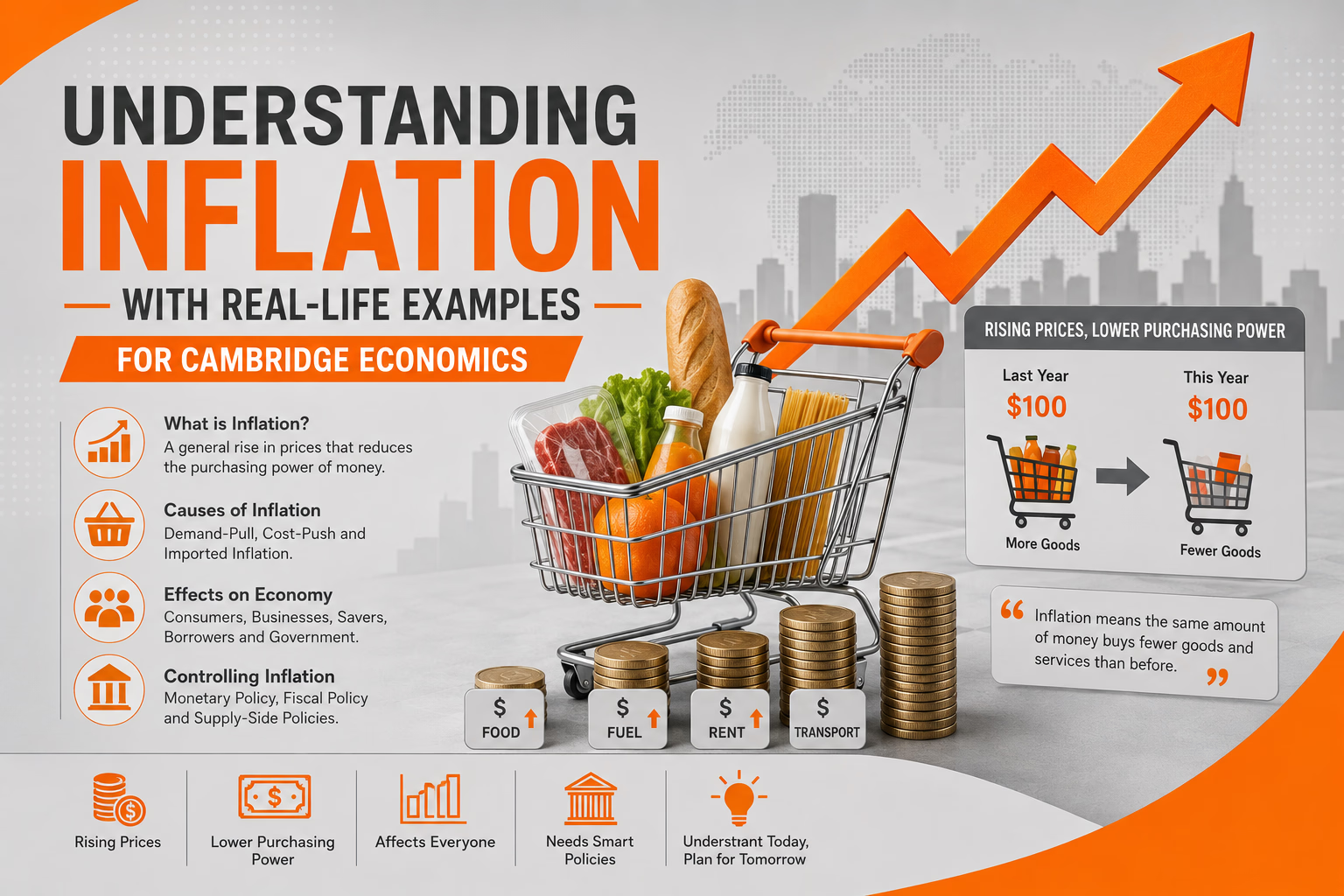
Inflation is the general and sustained increase in the average price level of goods and services over time, resulting in a fall in the purchasing power of money.
In simple terms, when inflation occurs, the same amount of money buys fewer goods and services than before.
For example:
- Last year, a burger cost $5.
- This year, the same burger costs $5.50.
The price has increased by 10%. If many goods and services experience similar price increases across the economy, inflation is occurring.
A Simple Real-Life Example
Imagine you have $100.
Last year, you could buy:
- 10 notebooks at $10 each.
This year, each notebook costs $12.
Now your $100 only buys:
- 8 notebooks with some money left over.
Your money has not changed, but its purchasing power has decreased.
This is the basic effect of inflation.
Why Does Inflation Happen?
Economists generally classify inflation into three major types:
- Demand-Pull Inflation
- Cost-Push Inflation
- Imported Inflation
Understanding these types is essential for Cambridge examinations.
Demand-Pull Inflation
Demand-pull inflation occurs when total demand in the economy grows faster than the economy’s ability to produce goods and services.
When many people want to buy the same products but supply cannot keep up, prices rise.
Real-Life Example
Suppose a new smartphone is released.
There are only 10,000 phones available, but 100,000 customers want to buy one immediately.
Because demand greatly exceeds supply, retailers increase prices.
This is demand-pull inflation.
Other Examples
- Economic boom increases consumer spending.
- Lower interest rates encourage borrowing.
- Government increases public spending.
- Higher household incomes increase consumption.
Cost-Push Inflation
Cost-push inflation occurs when the cost of production increases, forcing businesses to raise prices.
Real-Life Example
A bakery uses flour, sugar, electricity, and wages to produce bread.
If:
- Electricity prices rise
- Flour becomes more expensive
- Workers receive higher wages
The bakery’s production costs increase.
To maintain profit, it raises bread prices.
Consumers pay more even though demand has not changed.
Imported Inflation
Many countries import fuel, machinery, food, and raw materials.
If imported goods become more expensive, domestic prices also increase.
Real-Life Example
A country imports crude oil.
If global oil prices rise significantly:
- Petrol becomes more expensive.
- Transport costs increase.
- Delivery charges rise.
- Food prices increase.
Eventually, inflation spreads across the economy.
Measuring Inflation
Most countries measure inflation using a Consumer Price Index (CPI).
The CPI tracks the prices of a representative basket of goods and services purchased by households.
This basket may include:
- Food
- Clothing
- Housing
- Transportation
- Healthcare
- Education
- Utilities
- Entertainment
If the average cost of this basket rises by 5% over one year, the inflation rate is 5%.
Real-Life Example of CPI
Imagine the average monthly shopping basket costs:
- January 2025 = $400
- January 2026 = $420
The increase is:
[
\frac{420 – 400}{400} \times 100 = 5%
]
Therefore, the annual inflation rate is 5%.
Effects of Inflation on Consumers
Consumers usually experience inflation first.
Reduced Purchasing Power
People can buy fewer goods with the same income.
Example:
A family earning $2,000 per month may have comfortably managed expenses last year.
After inflation:
- Food costs more.
- Electricity bills increase.
- Fuel becomes expensive.
Their income remains the same, but living standards decline.
Lower Real Income
If salaries increase by only 3% while inflation rises by 7%, workers effectively become poorer.
Their nominal income rises, but their real income falls.
Effects on Businesses
Inflation affects firms in several ways.
Rising Production Costs
Businesses pay more for:
- Raw materials
- Transport
- Wages
- Electricity
Higher costs reduce profit margins.
Uncertain Investment
Rapid inflation makes future costs difficult to predict.
Businesses may delay expansion because they cannot estimate future expenses accurately.
Changing Consumer Demand
As prices increase, households often reduce spending on luxury goods.
Businesses selling non-essential products may experience lower sales.
Effects on Savers
Inflation reduces the real value of savings.
Example:
You save $10,000 in a bank earning 2% interest.
If inflation is 6%, your money grows slightly, but prices rise much faster.
Your savings lose purchasing power over time.
Effects on Borrowers
Borrowers often benefit from moderate inflation.
Imagine borrowing $100,000 today.
If inflation rises while your loan amount remains fixed, the money you repay is worth less in real terms.
This reduces the real burden of debt.
Effects on the Government
Governments face both advantages and disadvantages.
Advantages:
- Higher tax revenue from increased incomes and prices.
- Reduced real value of government debt.
Disadvantages:
- Greater pressure to increase public sector wages.
- Rising costs of healthcare, education, and infrastructure.
- Public dissatisfaction if living costs become too high.
Inflation and Unemployment
Inflation and unemployment often interact.
During periods of strong economic growth:
- Demand increases.
- Businesses hire more workers.
- Unemployment falls.
However, increased demand may also cause inflation.
Cambridge students should understand that policymakers often face a trade-off between controlling inflation and maintaining low unemployment.
Government Policies to Control Inflation
Governments and central banks use several policies.
Monetary Policy
The central bank may:
- Increase interest rates.
- Reduce money supply.
- Encourage saving.
- Discourage borrowing.
Higher interest rates reduce spending and investment, lowering demand and slowing inflation.
Fiscal Policy
Governments may:
- Reduce public spending.
- Increase taxes.
These measures reduce aggregate demand and help control rising prices.
Supply-Side Policies
Governments may improve productivity by:
- Investing in education and skills.
- Improving infrastructure.
- Encouraging competition.
- Supporting technological innovation.
Higher productivity increases supply, helping reduce inflationary pressure over the long term.
Inflation During Global Events
Several recent global events demonstrate inflation in action.
COVID-19 Pandemic
Factory closures disrupted production worldwide.
As economies reopened:
- Consumer demand recovered quickly.
- Supply struggled to keep pace.
Prices increased across many industries.
Rising Energy Prices
Higher oil and natural gas prices increased transportation and electricity costs.
Businesses passed these higher costs to consumers.
This contributed to cost-push inflation in many countries.
Supply Chain Disruptions
Delays at ports and shortages of shipping containers increased import costs.
Retailers paid more to obtain goods, resulting in higher prices for consumers.
Examination Tips for Cambridge Students
To score highly in inflation questions:
- Always define inflation accurately.
- Distinguish between demand-pull and cost-push inflation.
- Use well-labelled diagrams where appropriate.
- Apply theory to the context given in the question.
- Explain the chain of economic reasoning.
- Include relevant real-life examples.
- Evaluate government policies by discussing both strengths and limitations.
Remember, Cambridge rewards analysis and evaluation—not just memorised definitions.
Common Mistakes Students Make
Avoid these common errors:
- Confusing inflation with a one-time price increase.
- Assuming all inflation is harmful.
- Forgetting to explain why prices rise.
- Ignoring the impact on different economic groups.
- Writing definitions without application or analysis.
- Missing evaluation in higher-mark questions.
Correcting these mistakes can significantly improve your exam performance.
Final Thoughts
Inflation is far more than an economic definition—it is a force that shapes everyday life. Whether you’re paying more for groceries, noticing higher transport fares, or seeing rising housing costs, inflation affects the purchasing power of money and influences decisions made by consumers, businesses, and governments alike.
For Cambridge Economics students, mastering inflation means understanding why prices rise, how inflation impacts different groups, and what policies governments use to control it. By combining strong theoretical knowledge with real-life examples and clear economic analysis, you’ll be well prepared to answer both short and essay-style questions confidently.
The key to success is not simply remembering facts, but thinking like an economist—analysing causes, evaluating consequences, and applying concepts to real-world situations. That approach will not only help you understand inflation but also move you closer to achieving top grades in Cambridge Economics.